the science · June 2026 · 6 min read
Does red light therapy work? The honest, cleared answer
Red light therapy is everywhere — and so is the hype. Here is the calm, cleared version: what it is, what it helps with, and how to read an FDA clearance number so you never have to just take our word for it.
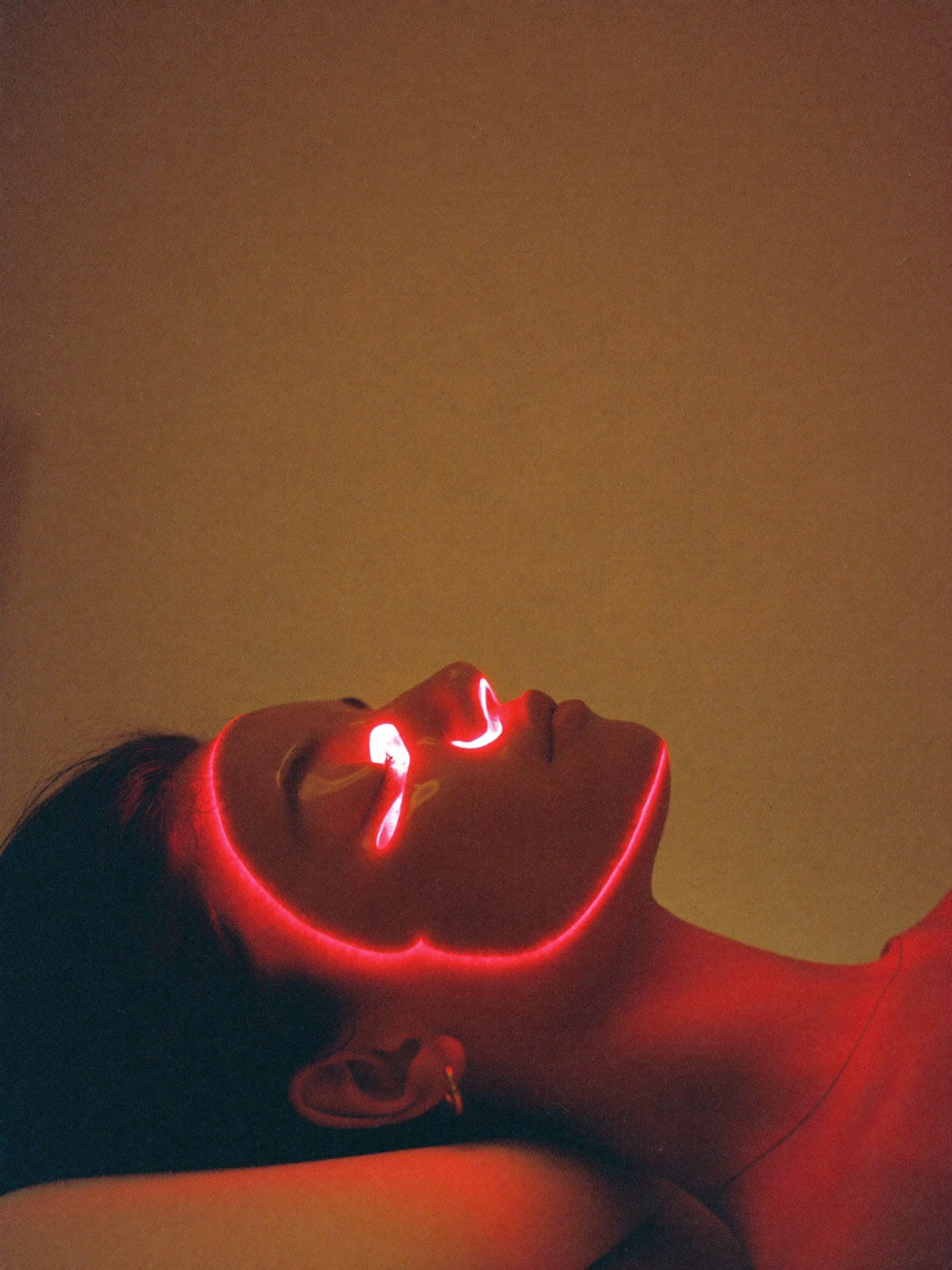
If you have spent any time in the wellness corners of TikTok or Instagram, you have seen the red glow: someone lying back, face bathed in warm light, looking impossibly rested. It is one of the most searched skincare topics in both the US and Europe right now. It is also one of the most over-claimed. So let us do the un-hyped version.
What red light therapy actually is
Red light therapy — sometimes called photobiomodulation — uses specific wavelengths of visible red and near-infrared light. The light is absorbed by the skin, where it is understood to support the cells’ natural energy processes. In plain terms: it is a gentle, non-invasive way to help improve the appearance of your skin over weeks of consistent use. It is the opposite of an aggressive treatment. You lie back and do nothing.
What the wavelengths mean
You will see numbers like 633nm, 660nm and 830nm. These are wavelengths, measured in nanometres, and they behave differently:
- Red (around 630–660nm) works nearer the surface and is associated with a more even, radiant look.
- Near-infrared (around 830–850nm) travels a little deeper into the skin’s layers.
- Blue (around 415nm) is often included to help keep skin looking clear.
A good device tells you exactly which wavelengths it uses. If a product will not say, that is worth noticing.
The part nobody wants to talk about: clearance
Here is where most of the market gets quiet. In the United States, an at-home light-therapy device that markets skin benefits should be FDA-cleared under a process called 510(k). That clearance has a number. Many masks sold online skip the clearance entirely and simply market the results anyway.
Everyone else asks for your trust. The honest move is to hand you the receipt — the clearance number — so you can verify it yourself.
This is the whole reason laia glow exists. We publish the FDA 510(k) clearance number on every product page. You can take that number to the FDA’s public 510(k) database and confirm it in about thirty seconds. Honesty, it turns out, is also the softest, most self-respecting thing a beauty-tech brand can offer.
How to use it (and how not to)
- Cleanse first — bare skin, before serums.
- Ten minutes is plenty for a full-face mask. More is not better.
- Consistency beats intensity. Think a few times a week, over weeks — never a punishing daily grind.
- Follow with your moisturiser while skin is still warm.
So — does it work?
Used consistently, a cleared red-light device helps improve the appearance of your skin: a more even tone, a rested, luminous look. It is not a magic wand and it will not happen in days. Radiance here is the reward of calm and consistency, not force. If a brand promises otherwise, that is the hype talking.
If you want the version of this that shows you its clearance number and lets the light do the rest, that is exactly what we built.
Meet the halo — our FDA-cleared red light mask
shop nowlaia glow devices are FDA-cleared under the 510(k) numbers shown on each product page. They help improve the appearance of skin with consistent use over weeks and are not intended to diagnose, cure, treat or prevent any condition. Individual results vary. This article is for information, not medical advice.
from the guide
the halo — $289
A full-face flexible-silicone mask. Three cleared wavelengths, one soft ritual.