the science · February 2026 · 5 min read
633 vs 660 vs 830nm: a plain-English guide to skincare wavelengths
The numbers on your device — 415, 633, 660, 830, 850 — are wavelengths, and each behaves differently. Here is the plain-English guide so you can read any LED device honestly.

Every serious light device lists a set of numbers measured in nanometres (nm). They are not marketing — they are the wavelengths of light the device emits, and each sits at a different depth and does a different job. Once you can read them, you can shop the whole category with clear eyes.
Blue — around 415nm
The shortest, most surface-level wavelength here. Blue light around 415nm is often included to help keep skin looking clear. It works right at the surface, which is why it pairs well with deeper red and near-infrared light.
Red — around 633 and 660nm
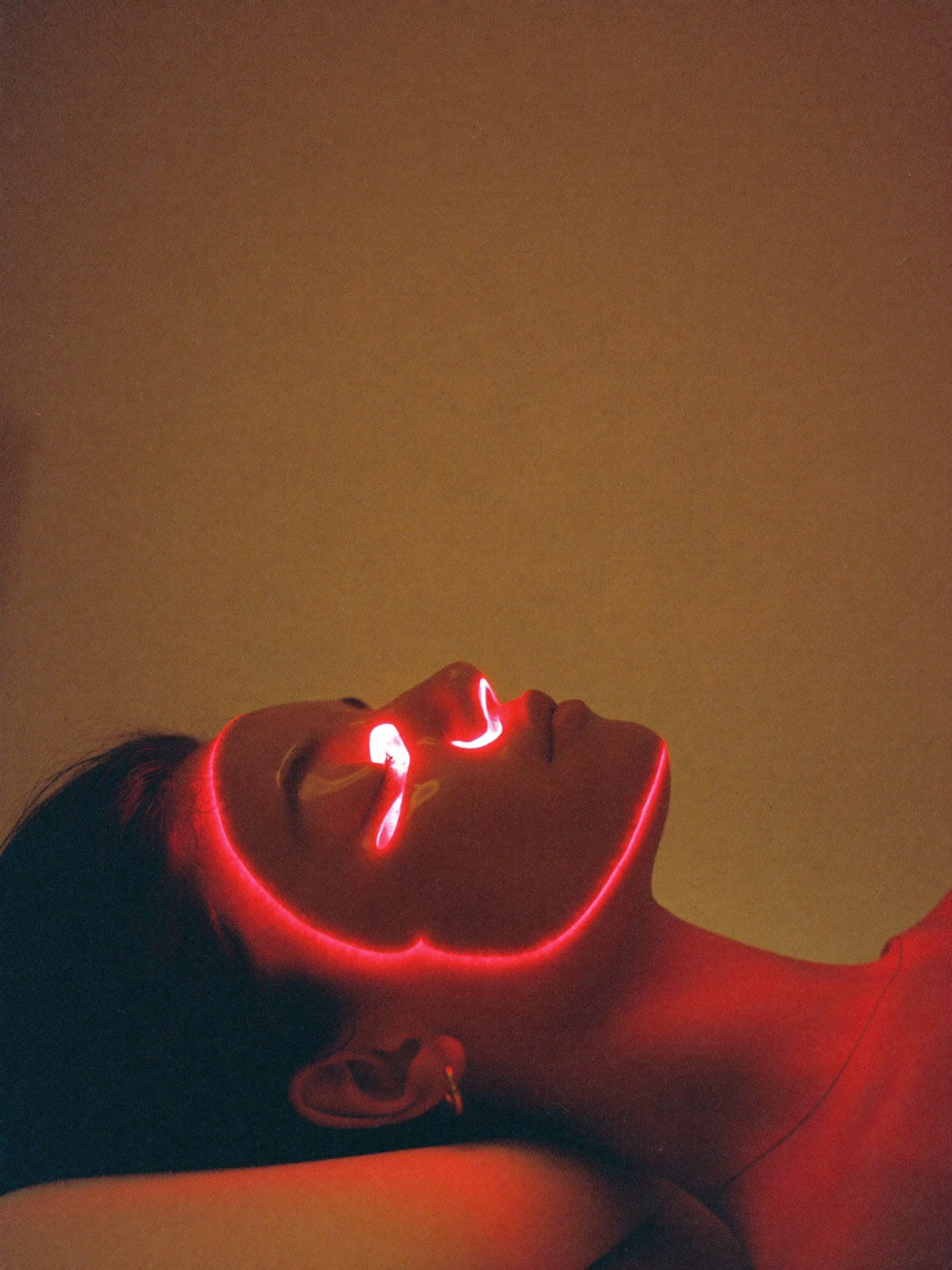
This is the classic “red light” range and the source of that warm glow. Red around 633–660nm works nearer the surface of the skin and is associated with a more even tone and a rested, radiant look. 633nm and 660nm are close cousins — both firmly in the red band, with 660 sitting a touch deeper.
Near-infrared — around 830 and 850nm
You cannot really see near-infrared, but it travels a little deeper into the skin’s layers than visible red. Wavelengths around 830–850nm are the “works quietly underneath” part of a good device.
- 415nm (blue): surface, helps skin look clear.
- 633–660nm (red): near-surface radiance and even tone.
- 830–850nm (near-infrared): deeper, supports the look of firmer skin.
read next What FDA clearance actually means for an LED maskA device that tells you its exact wavelengths is being honest with you. One that just says “clinical-grade light” is not.
How laia glow uses them
The halo combines red 633, near-infrared 830 and blue 415 for the whole face. The touch, our targeted wand, uses red 660 and near-infrared 850 for the delicate places — eyes, lips, smile lines. Every wavelength is printed on the product page, alongside the FDA 510(k) number.
See the wavelengths on the halo
shop nowlaia glow devices are FDA-cleared under the 510(k) numbers shown on each product page. They help improve the appearance of skin with consistent use over weeks and are not intended to diagnose, cure, treat or prevent any condition. Individual results vary. This article is for information, not medical advice.
from the guide
the halo — $289
A full-face flexible-silicone mask. Three cleared wavelengths, one soft ritual.